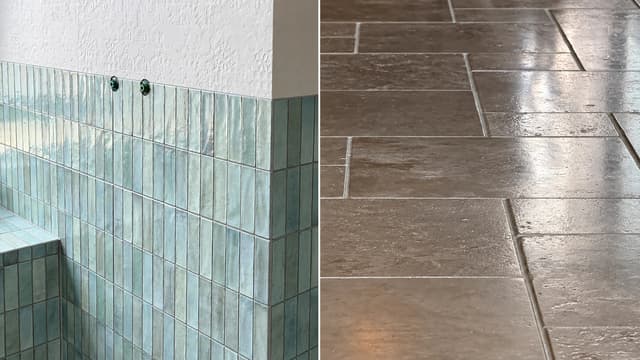
Compare wall tile and floor tile by intended use, strength, wear, surface, weight and installation, and learn when a floor tile may be installed on a wall.
Wall tile and floor tile can share the same colour, pattern and format, but that does not make them interchangeable. The important difference is the application for which the exact product has been designed, tested and declared.
A floor must withstand traffic, loads, abrasion, cleaning and the conditions created by water or contaminants. A wall avoids foot traffic but introduces different questions about weight, fixing, substrate condition and working vertically. This guide explains those differences and shows what to verify before approving a product.
The short answer
A tile declared only for wall use should not be installed on a floor. It may lack the strength, wear characteristics or surface-use information required for walking surfaces.
A floor tile can sometimes be installed on a wall, but only after confirming that the wall, substrate and fixing system can support its size and weight. Large or heavy products may require a more detailed installation design.
| Selection factor | Wall application | Floor application |
|---|---|---|
| Main demand | Secure vertical fixing and suitable support | Traffic, loads, wear and surface use |
| Product declaration | Confirm wall use and environmental exposure | Confirm floor use and the intended traffic or wet condition |
| Strength | Must remain securely bonded to the wall | Must resist service loads with the specified installation |
| Surface | Appearance and cleanability often lead | Wear, contaminants, cleaning and slip-related classification matter |
| Weight and format | Check substrate, mortar, coverage and temporary support | Check handling, substrate flatness and load support |
| Substitution rule | A suitable floor tile may be possible on a wall | Do not use wall-only tile on a floor |
1. Intended use comes before appearance
Product photos cannot establish whether a tile is suitable for a wall or floor. Two visually similar products may use different bodies, thicknesses, surfaces or manufacturing specifications.
Start with the manufacturer's current declaration for the exact model, size and finish. ISO 13006:2018 establishes international definitions, classifications, characteristics and marking requirements for ceramic tile made by normal extrusion or dry pressing. National markets and individual projects may apply additional standards or contractual requirements.
The practical rule is simple: approve the product code and technical information, not a generic description such as ceramic, porcelain or premium tile.
2. Floor tile must respond to traffic and loads
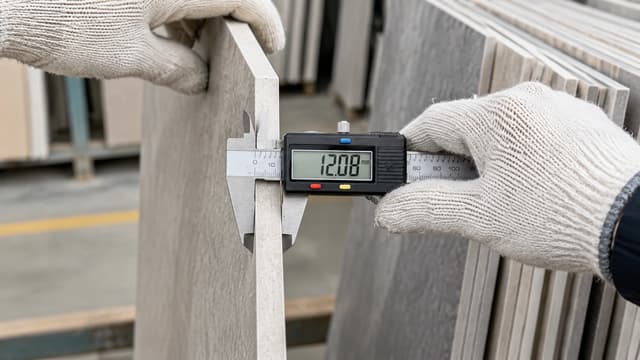
Walking surfaces face repeated foot traffic, furniture, point loads, impact and cleaning equipment. Depending on the project, the buyer may need information about breaking strength, thickness, abrasion or wear, surface use and dimensional consistency.
Thickness alone does not make a product floor-rated. Strength depends on the tile body, manufacturing process, format, thickness, support and test method. Installation also matters: voids, an unsuitable substrate or inadequate coverage can undermine an otherwise suitable product.
3. Surface requirements differ
On an interior wall, colour, gloss, relief and cleanability may be the leading surface considerations. A floor surface must also be evaluated for traffic, wear, expected contaminants and maintenance.
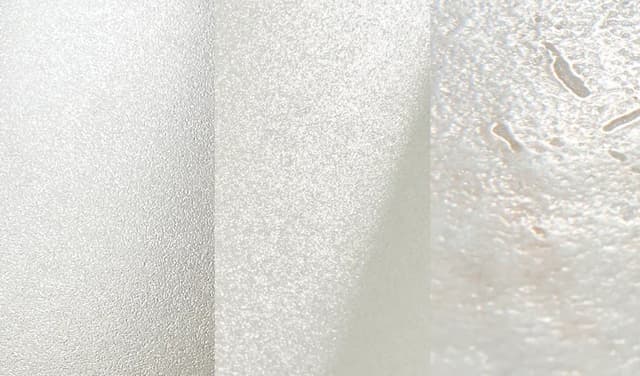
Matt does not automatically mean slip resistant, and polished does not automatically mean unsuitable. TCNA explains that dynamic coefficient of friction and slip resistance are not synonymous. Footwear, contaminants, slope, drainage, maintenance and the way the surface is used all affect risk. Request the product-use classification relevant to the destination market and intended area.
For a deeper finish comparison, read How to Choose a Tile Finish by Application.
4. Water absorption is not a wall-or-floor rating
Water absorption helps classify the tile body. It does not independently prove that a product is suitable for a floor, shower, exterior area or pool.
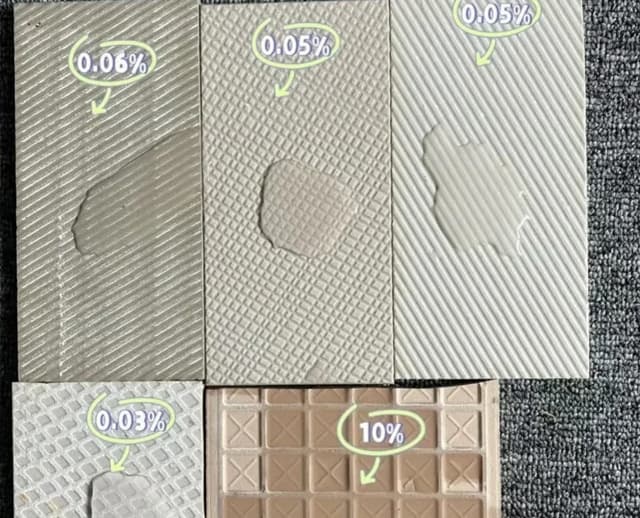
A low-absorption porcelain tile may still have an inappropriate surface for a particular wet floor. A more absorptive glazed ceramic tile may be a practical interior wall product when it is declared for that use. Review Tile Water Absorption Ratings Explained before using the percentage in a specification.
5. Wall installations introduce weight and fixing questions
A wall installation must transfer the tile load through the bonding system to a suitable substrate. Format, thickness and body affect weight; relief and backing can affect mortar contact.
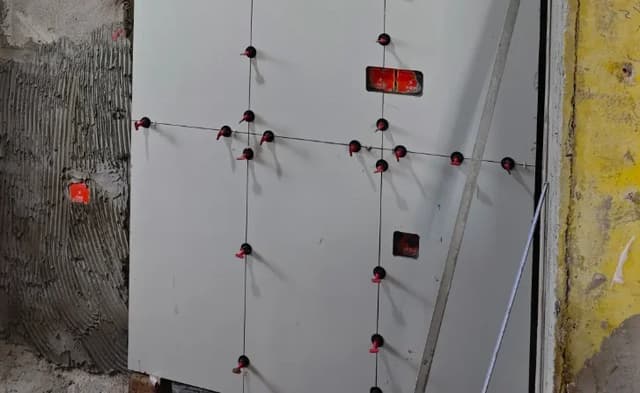
Before placing a floor tile on a wall, confirm:
- the weight per square metre and tile dimensions;
- the substrate type, condition and load capacity;
- the specified adhesive or mechanical fixing method;
- required coverage, joint design and movement accommodation;
- temporary support and safe handling during installation;
- local codes, project specifications and installer guidance.
Large-format or exterior wall applications may require project-specific engineering. Do not assume that a product can move from floor to facade without a separate review.
Can floor tile be used on a wall?
Often, but not automatically. The product must be suitable for the wall environment, and the complete wall assembly must support it. This is common when a designer wants one coordinated surface across a bathroom or hospitality interior.
Confirm the exact size and weight rather than relying on the range name. A small floor tile and a large slab from the same collection can create very different fixing demands.
Can wall tile be used on a floor?
Not when the product is declared only for walls. A wall-only product has not established suitability for walking-surface loads, wear and use conditions. Similar appearance, thickness or body colour is not enough evidence.
If a coordinated design is required, ask whether the collection includes a floor-rated companion product. This preserves the visual concept without using the wrong specification.
Buyer verification checklist
- Record the exact wall or floor location and environmental exposure.
- Confirm the model, size, thickness, body, finish and declared use.
- Request the applicable product standard and relevant test evidence.
- For floors, review loads, wear, contaminants, cleaning and surface-use information.
- For walls, review weight, substrate, fixing, coverage and movement details.
- Connect the approved sample and documents to the production batch.
Frequently asked questions
Is every porcelain tile suitable for floors?
No. Porcelain describes a very low water-absorption category. Confirm that the exact model, size and finish are declared for the intended floor conditions.
Is floor tile always thicker than wall tile?
No. Thickness varies by product and format. It should not be used as a substitute for declared use and product-specific evidence.
Can the same tile cover a bathroom wall and floor?
It may be possible when the product is declared suitable for both applications and the wall fixing and floor surface requirements are satisfied. Otherwise, choose visually coordinated wall and floor products.
Define the surface before selecting the style
First decide what the installation must withstand. Then compare colours, formats and finishes among products that meet the technical brief. The related guide How to Choose Wall and Floor Tile by Application covers bathrooms, kitchens, residential floors, commercial interiors and exterior areas.
Join the discussion
Your email address will not be published. Required fields are marked.