Choose tile finish for bathrooms, kitchens, commercial floors and exteriors using project conditions, product declarations and technical evidence.
Choose a tile finish after defining the application—not before.
A polished wall, matte residential floor and textured exterior surface may all be appropriate within one project. The decision depends on water exposure, contaminants, traffic, footwear, slope, drainage, cleaning and the manufacturer’s declared product use.
“Matte,” “polished” and “textured” describe appearance and surface structure. They do not replace product-specific technical information.
Start with the project conditions
Before comparing samples, record the wall or floor application, interior or exterior location, dry or wet conditions, expected contaminants, barefoot or footwear use, traffic, rolling loads, slope, drainage, cleaning method, destination-market standards, dimensions and quantity.
This brief helps the supplier identify a suitable product rather than simply recommending the roughest or least reflective option.
A finish name is not a safety classification
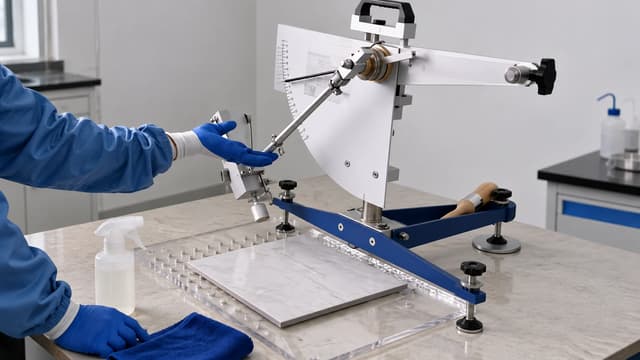
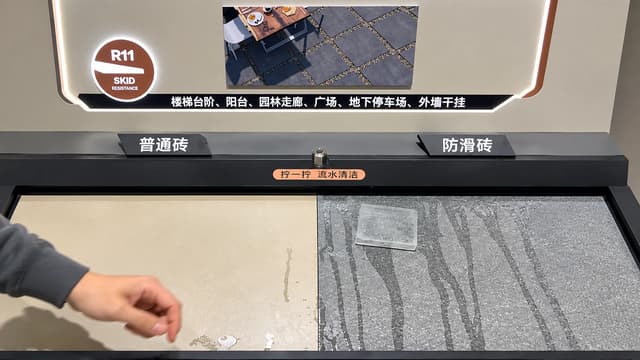
Matte and textured tiles may provide useful surface structure, but the finish name alone cannot predict whether someone will slip.
The Tile Council of North America explains that DCOF and slip resistance are not synonymous. Water, soap, oil, dirt, footwear, surface wear, slope, drainage and maintenance can all affect actual conditions. A DCOF result should therefore not be the only factor used to approve flooring. Read the TCNA DCOF guidance.
Testing and classification systems also vary between markets. Do not assume that DCOF, COF, ramp-test results and an “anti-slip” marketing description are interchangeable. Request the classification required for the project location and confirm that it applies to the exact product and finish being ordered.
Quick application guide
| Application | Initial finish direction | What still needs verification |
|---|---|---|
| Bathroom wall | Matte or polished | Cleaning, water spots, format and fixing |
| Bathroom floor | Matte or textured candidate | Wet-use declaration, soap, barefoot use, slope and drainage |
| Residential kitchen | Matte or suitable structured finish | Spills, grease, cleaning and floor-use declaration |
| Commercial interior | Matte or project-rated finish | Traffic, wear, contaminants and maintenance |
| Exterior terrace | Exterior-rated textured finish | Climate, drainage, wet-use classification and installation |
| Feature wall | Matte, polished or textured | Weight, fixing, lighting, direction and cleanability |
The table is a starting point. Final approval must be based on the specific product.
Bathrooms and showers
Treat walls and floors separately. A polished tile can work on a bathroom or shower wall where reflection supports the design and walking-surface criteria do not apply. Water spots and soap residue may be more visible, so cleaning expectations should be reviewed.
For a bathroom or shower floor, define barefoot use, water and soap exposure, slope, drainage, tile format, grout joints, cleaning routine and the required wet-use classification. Small mosaics can introduce more grout joints, but grout alone does not replace approval of the tile and complete floor assembly.
Kitchens and food-service areas
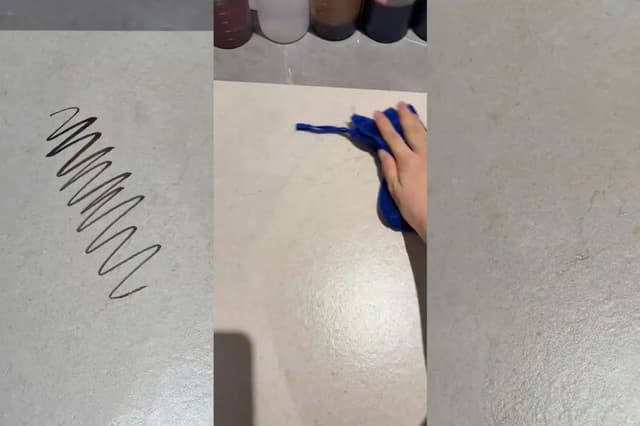
Residential kitchens may encounter water, food and cooking oils. Commercial food-service areas can present more demanding grease, cleaning and traffic conditions.
Do not specify a product from a generic “non-slip” description. Identify the likely contaminants and ask whether the relevant product-use information covers those conditions. Textured surfaces may support project requirements, but deeper recesses can retain grease or residue. Cleaning trials are especially important where hygiene and frequent washing are priorities.
For kitchen walls and backsplashes, a smoother matte or polished glaze may be easier to wipe than a deeply structured decorative surface.
Hotels, retail and commercial floors
Commercial interiors require a balance between appearance and operating conditions. A polished lobby may create a strong first impression, but the design team should consider entrance dirt, rolling luggage, concentrated traffic, cleaning schedules and the visibility of wear.
Review declared floor use, surface-use classification, abrasion data, cleaning equipment, entrance matting, replacement planning and appearance under project lighting. Where the same design is available in several finishes, different surfaces may be assigned to the lobby, restroom and exterior transition while maintaining colour continuity.
Exterior terraces and pool surroundings
Exterior suitability involves more than texture. Confirm the exterior-use declaration, wet-use requirements, rain and organic contamination, drainage, slope, freeze-thaw requirements where relevant, thermal movement, cleaning access, installation and joint details.
A textured indoor tile should not automatically be treated as an exterior tile. The manufacturer must confirm the intended use of the exact product.
Feature walls and decorative surfaces
Walls offer more freedom because walking-surface criteria do not apply. Matte, polished and textured finishes can all be used to manage light, visual depth and brand character.
Large or structured wall tiles still require checks for tile weight, format, substrate capacity, fixing method, edge treatment, lighting direction, cleaning access and texture orientation. Side lighting can make a subtle texture much more pronounced after installation.
Technical information to request
- Wall, floor, interior or exterior use
- Relevant surface-use classification
- Glazed, unglazed or polished construction
- Abrasion or wear information
- Chemical-resistance information
- Cleaning and maintenance guidance
- Shade and texture variation
- Directional-laying instructions
- Current samples
- Available test reports or declarations
Water absorption is another part of product classification, but it does not choose the finish by itself. See Tile Water Absorption for Project Specification for the complete decision process.
For a direct visual comparison between low- and high-reflection surfaces, read Matte vs Polished Tile.
Approve the finish through a representative sample
Review several pieces under lighting similar to the project. Examine them dry, after cleaning and—where appropriate—under representative exposure conditions.
For larger orders, record the approved model, finish, dimensions and sample reference. A product photograph cannot confirm cleanability, texture, reflection or suitability.
Request a project-specific finish shortlist
Ceraglow supplies ceramic and porcelain tiles for importers, distributors, contractors and project buyers. Send us the application, expected contaminants, preferred appearance, destination market, dimensions and estimated quantity so our team can review suitable product directions and prepare available samples and specifications.
Written by Ceraglow Product R&D Department. Reviewed by Ceraglow Content Review Department.
Join the discussion
Your email address will not be published. Required fields are marked.