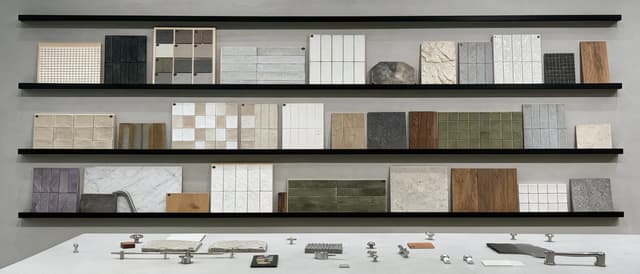
Research local tile demand by customer segment, application, climate, design, size, price and sales channel before choosing products or placing an import order.
A tile that sells in one country may move slowly in another, even when the product is well made. Housing types, room dimensions, climate, construction practice, design preferences, installer capability, price expectations and sales channels all shape demand.
Importers therefore need evidence from their own market before selecting products from a factory catalogue. This guide explains how to turn local observations into a focused sourcing brief.
Start with the buying decision, not the catalogue
The goal is not to identify every tile customers might like. It is to find the smallest group of products that covers valuable use cases, fits the sales channel and can be stocked with manageable risk.
Begin with five questions:
- Who decides which tile to buy?
- Where will the product be installed?
- Which designs, formats and price bands already sell?
- Which climate, building and installation conditions affect the specification?
- How will customers discover, compare, buy and reorder the product?
1. Separate the customer segments
A market is not one audience. Divide it into groups with different buying criteria.
| Customer | Typical priorities to research |
|---|---|
| Retail homeowner | Appearance, price per square metre, availability, cleaning and room suitability |
| Installer or contractor | Dimensions, cutting, handling, laying speed, substrate and replenishment |
| Architect or designer | Samples, colour, format, technical documents, digital assets and project support |
| Developer or project buyer | Compliance, volume, batch consistency, schedule, spare stock and commercial risk |
| Distributor or dealer | Inventory turn, margin, display space, differentiation and repeat supply |
One product may serve several groups, but the sample tools, documents, price presentation and stock plan can differ. Interview each group separately instead of asking broad questions about popular tiles.
2. Map demand by application
Colour alone is a weak way to measure demand. Estimate the size and buying criteria of the main applications: interior walls, residential floors, bathrooms, commercial floors, exterior areas, facades and pools.
Record which applications generate enquiries, quotes and completed sales. Note where customers fail to find a suitable product or where installers reject a format or surface. Lost-sale reasons often reveal a better opportunity than general trend reports.
For technical distinctions between surfaces, use How to Choose Wall and Floor Tile by Application.
3. Study climate and building conditions

Climate does not identify one automatic product, but it changes the questions a buyer must ask.
- Freeze-thaw markets: research exterior exposure, saturation, drainage, local installation practice and demand for product-specific frost evidence.
- Hot and high-solar-exposure markets: review thermal movement, substrate temperatures, exterior systems, colour preferences and installation timing.
- Humid and wet markets: study bathrooms, covered exteriors, cleaning, ventilation, algae, drainage and waterproofing practice.
- Sandy or high-dirt environments: investigate tracked abrasive soil, entrance design, finish, maintenance and long-term surface appearance.
TCNA notes that frost-resistant tile can still be damaged when water enters joints or voids and freezes. Market research must therefore include installation capability, not only tile classification.
4. Audit local design demand
Visit showrooms, dealer displays, project sites and competitor websites. Record evidence rather than impressions:
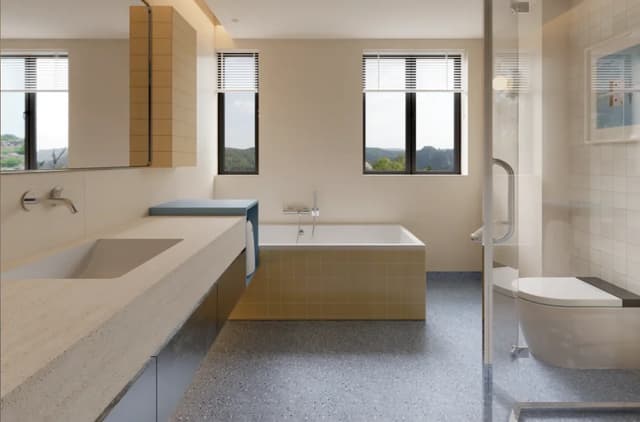
- leading colours and undertones;
- marble, stone, concrete, wood, terrazzo or decorative preferences;
- popular sizes and grout-joint expectations;
- matt, polished, textured and glossy finish demand;
- rectified and non-rectified preferences;
- the ratio of quiet core designs to statement products;
- room sizes, ceiling heights and display limitations;
- competitor stock depth and promotional price points.
Photograph displays where permitted and record the date, retailer, product type and visible price. A trend without channel or price context is difficult to use.
5. Measure format fit
Large tile can create a strong showroom impression, but local demand depends on more than style. Interview warehouses, delivery teams and installers about racks, forklifts, vehicle access, lifting tools, cutting equipment, substrate flatness and breakage.
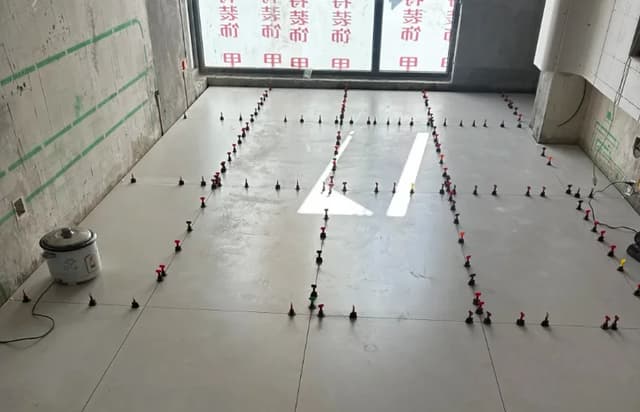
Ask whether the typical home or project has enough uninterrupted space to use the format effectively. A size that produces excessive cutting or requires equipment the channel does not have may create slow sales and claims.
6. Research price through the full channel
Collect retail prices, project prices, promotional behaviour and expected dealer margins. Separate opening-price products, dependable mid-market ranges and premium or differentiated products.
Do not treat the lowest observed price as the target. Record what the product includes: size, body, finish, packaging, brand support, stock availability, delivery and documentation. Two products with similar appearance may support different price points because the service and supply model differ.
7. Combine online and offline evidence
Search-demand tools, marketplaces and social platforms can reveal language and interest, but they should not be used alone. Combine them with:
- dealer and installer interviews;
- quotation and lost-sale records;
- showroom and project audits;
- sample requests and conversion;
- returns, complaints and damage records;
- search volume and marketplace listings;
- competitor stock and replenishment observations.
Use the same categories across sources so results can be compared. For example, tag every observation by application, customer, size, finish, design family and price band.
8. Turn research into opportunity statements
A useful conclusion is specific enough to guide sourcing. Replace “large marble tile is popular” with a statement such as: “Mid-market apartment dealers report repeated demand for light warm marble-look residential floor tile in a format their installers can cut and carry, with dependable repeat stock.”
For every opportunity, record:
- target customer and application;
- design, colour, size and finish;
- required performance and documents;
- target retail or project price band;
- channel and display method;
- evidence source and confidence level;
- the next assumption to test.
A simple market research scorecard
| Area | Question | Evidence |
|---|---|---|
| Demand | Are buyers already requesting the application and style? | Enquiries, quotes, sales and searches |
| Channel | Can dealers display, explain and reorder it? | Dealer interviews and showroom audit |
| Installation | Can local installers handle the format and system? | Installer interviews and site observation |
| Price | Is there a viable price and margin position? | Competitor prices and channel economics |
| Differentiation | Does the product add a useful choice? | Range comparison and lost-sale gaps |
| Confidence | Do several independent sources agree? | Triangulated online and offline evidence |
Frequently asked questions
Which tile sells best in every country?
No tile leads every market. Demand changes with application, design culture, construction practice, climate, format, price and channel.
How many interviews are enough?
There is no universal number. Continue until patterns repeat across the priority customer groups, while recording contradictory evidence rather than hiding it.
Can search volume replace dealer research?
No. Search data can reveal interest and language, but dealer, installer and sales evidence shows whether a product can be displayed, installed, stocked and sold profitably.
Use market evidence to write the sourcing brief
Research should end with a small number of testable product opportunities, not a larger mood board. The next guide, How to Build a Market-Ready Tile Assortment, turns those opportunities into a controlled range, compliance checklist and pilot order.
Join the discussion
Your email address will not be published. Required fields are marked.