Compare matte vs polished tile by appearance, lighting, cleaning, scratches and maintenance, and learn what to verify before selecting a finish.
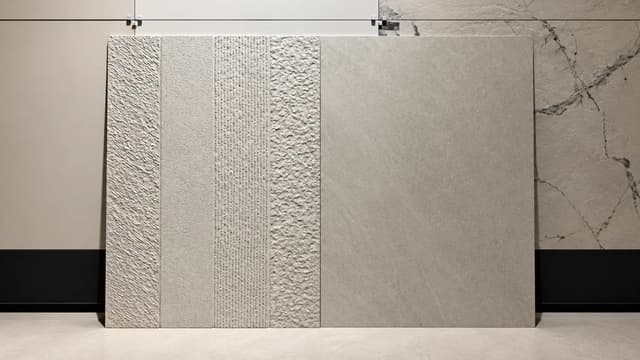
Matte and polished tiles can use the same colour or pattern but create very different results after installation. Matte surfaces diffuse light and give an interior a softer appearance. Polished surfaces reflect light, strengthen colour and veining, and create a brighter visual effect.
Neither finish is automatically better. The right choice depends on where the tile will be installed, how the space is lit, what contaminants it will encounter, and how it will be cleaned.
For floors, do not select a product from appearance alone. Confirm that the exact tile and finish are declared suitable for the intended application.
Matte vs polished tile: quick comparison
| Factor | Matte tile | Polished tile |
|---|---|---|
| Light reflection | Low and diffused | High and reflective |
| Visual effect | Soft, calm and natural | Bright, sharp and formal |
| Everyday marks | May disguise dust and footprints | Can make smears and water spots more visible |
| Cleaning | Depends on surface microtexture | Smooth surface can be easy to wipe, but streaks may show |
| Fine scratches | Often less visually obvious | Reflection can make scratches more noticeable |
| Typical design role | Floors, calm interiors and natural looks | Feature walls and selected controlled interiors |
| Selection requirement | Verify exact product use | Verify exact product use and maintenance conditions |
This comparison describes common tendencies, not guaranteed performance. Two matte tiles can have different surface structures, just as two polished tiles can have different use classifications.
What is a matte tile finish?
A matte tile reflects less light than a polished product. Its appearance may come from a glaze, mould structure, surface treatment or the absence of a final polishing stage.
Matte finishes are often selected for stone-, concrete- and cement-look interiors, rooms where glare needs to be controlled, and large surfaces intended to feel calm and consistent. They can also make some footprints and water spots less obvious.
Matte does not mean maintenance-free. A smooth matte glaze may clean differently from a product with pronounced microtexture. Construction residue or unsuitable cleaning chemicals can also change how the surface looks. The word “matte” should not be treated as proof that a floor is suitable for wet use.
What is a polished tile finish?
Polishing creates a smoother and more reflective tile face. Light can make colours appear deeper and highlight marble-look veining, decorative patterns and surface detail.
Polished tile is commonly considered for feature walls, hotel and retail interiors, showrooms, reception areas and dry spaces where reflected light supports the design.
Reflection also reveals more. Dried water, footprints, cleaning streaks, fine scratches, substrate irregularities and installation alignment may become easier to see. Before using a polished product on a floor, confirm the manufacturer’s intended application and consider traffic, contaminants, footwear, wear and cleaning frequency.
How the finish changes colour and lighting
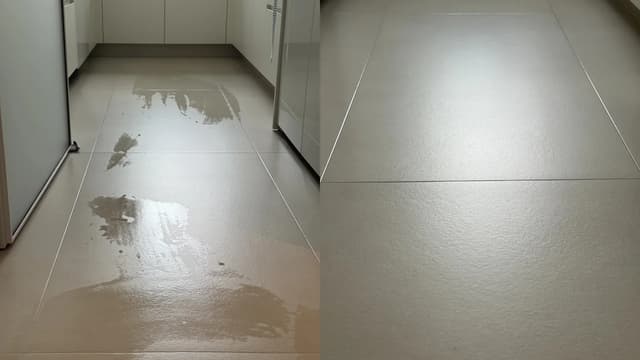
Matte surfaces scatter light. This can soften strong colours and reduce glare, but side lighting may still reveal lippage, shade differences, surface texture or cleaning marks.
Polished surfaces reflect windows, luminaires, furniture and movement. That can make a small or dark interior feel brighter, but it can also create glare and make installation imperfections more visible.
For large projects, review several pieces rather than one showroom sample. Check the tiles vertically and horizontally because viewing angle changes how the surface appears.
Which finish is easier to clean?
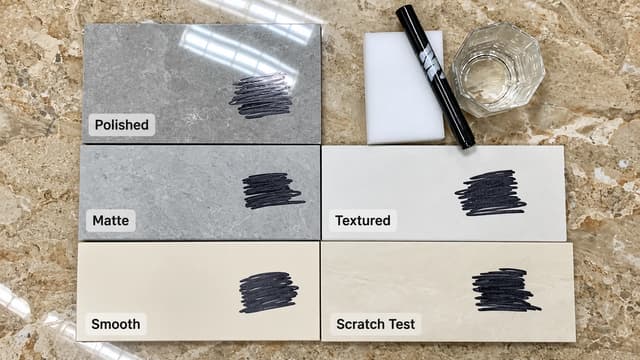
There is no universal answer. A polished surface can be quick to wipe because it is smooth. However, streaks, fingerprints and dried water may remain visible under reflected light. Maintaining the intended appearance may require more frequent cleaning and careful drying.
A matte surface can hide some everyday marks, but fine texture may retain soil, grout residue or cleaning product. Deeply structured surfaces may require suitable brushes or cleaning pads.
Before approval, identify the expected soil, confirm permitted cleaning chemicals, test the cleaning method on the exact finish, and examine the dry surface under representative lighting. ISO 10545-13 specifies a method for determining the chemical resistance of ceramic tiles at room temperature.
Wear and long-term appearance
Traffic affects both finishes. Reflective surfaces may make fine scratches, dull areas and concentrated traffic paths more visible. Matte finishes can disguise some changes, although dirt can become embedded in textured surfaces if maintenance is unsuitable.
Ask whether the product is glazed or unglazed and which abrasion test applies. ISO 10545-7 covers surface abrasion resistance for glazed ceramic floor tiles. A finish that looks attractive when new may not be suitable if the project cannot control abrasive dirt, rolling loads or cleaning equipment.
Can matte and polished tile be used together?
Yes. Coordinated finishes can separate wall and floor requirements while maintaining a consistent colour or pattern. Examples include a polished wall with a coordinated matte floor, a matte field tile with polished details, or different finishes from one collection used across dry and wet zones.
Confirm dimensions, shade, calibration and edge treatment before combining products. Tiles with the same design name may not have identical production characteristics.
Questions to ask before selecting a finish
- Is the product glazed, unglazed or mechanically polished?
- Is the exact finish intended for walls, floors or both?
- What wear and cleaning information applies?
- Which chemicals or pads should be avoided?
- How visible are fingerprints, water spots and scratches?
- Is the texture directional?
- Can multiple samples be reviewed under project lighting?
- Can the approved sample be matched to the production order?
For bathrooms, commercial floors or exterior areas, continue with How to Choose a Tile Finish by Application.
Request finish samples before final approval
Ceraglow manufactures ceramic and porcelain tiles for international wholesale, private-label and project supply. Send us the intended application, preferred finish, dimensions, destination market and estimated quantity so we can help shortlist relevant products and prepare available samples and specifications.
Written by Ceraglow Product R&D Department. Reviewed by Ceraglow Content Review Department.
Join the discussion
Your email address will not be published. Required fields are marked.