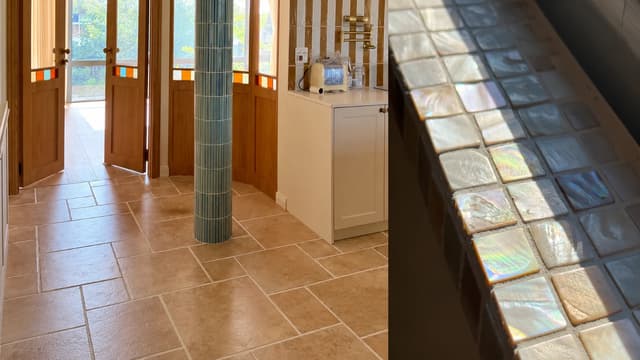
Compare subway tile sizes, pieces per carton, square metres, net weight and estimated tile volume before planning a wholesale or project shipment.
Packaging data affects landed cost, warehouse handling and order quantities. Confirm pieces, area and weight per carton and cartons per pallet with the product specification.
The examples below use selected small-format ceramic wall tile configurations from a supplier reference dated July 22, 2024. They are planning examples, not current offers. Confirm the final model, packing version and shipping data before ordering.
1. What a packing specification should include
A useful specification identifies the product code, subway tile dimensions, thickness, surface, edge and finish. It should also state pieces and square metres per carton, net and gross carton weight, cartons per pallet, pallet dimensions, gross pallet weight and label requirements.
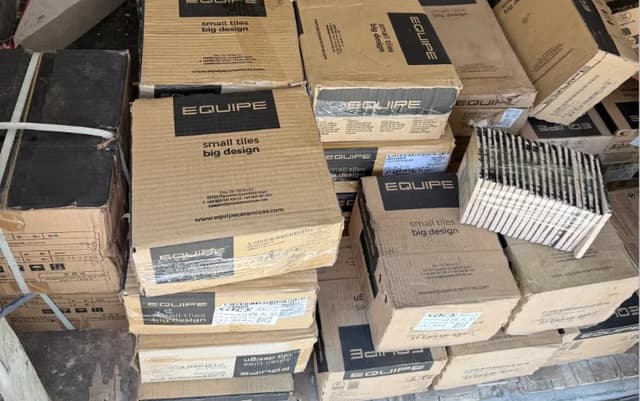
Net tile weight is not shipping weight. The final gross figure must include cartons, pallet, separators, corner protection, straps and film. Without pallet length, width and loaded height, cartons per pallet are not enough to calculate container space.
2. Representative subway tile sizes and packing data
These are reference values from one supplier sheet. Packing varies by model and is updated as factory data changes. Request the latest confirmed specification before quotation or shipment planning.
| Size and thickness | Pieces/carton | m²/carton | Net kg/carton | Cartons/pallet | m²/pallet | Net kg/pallet |
|---|---|---|---|---|---|---|
| 50×200×8 mm | 100 | 1.00 | 13.8 | 84 | 84.00 | 1,159.2 |
| 75×150×7 mm | 100 | 1.125 | 13.5 | 80 | 90.00 | 1,080.0 |
| 75×150×8 mm bevelled | 90 | 1.0125 | 13.0 | 80 | 81.00 | 1,040.0 |
| 75×300×8 mm | 44 | 1.00 | 13.0 | 88 | 88.00 | 1,144.0 |
| 75×300×9 mm textured | 44 | 1.00 | 15.0 | 88 | 88.00 | 1,320.0 |
| 100×200×7 mm, new packing | 57 | 1.14 | 13.2 | 84 | 95.76 | 1,108.8 |
| 100×300×8 mm, new packing | 50 | 1.50 | 20.0 | 64 | 96.00 | 1,280.0 |
| 100×400×8 mm | 25 | 1.00 | 14.0 | 84 | 84.00 | 1,176.0 |
These calculated pallet weights cover the tiles only. They must not be used as gross transport weights.
3. How to calculate a pallet load
Use current factory data:
- Pieces per pallet = pieces per carton × cartons per pallet
- Area per pallet = m² per carton × cartons per pallet
- Net tile weight per pallet = net kg per carton × cartons per pallet
- Estimated tile volume per pallet = tile length × width × thickness × pieces per carton × cartons per pallet
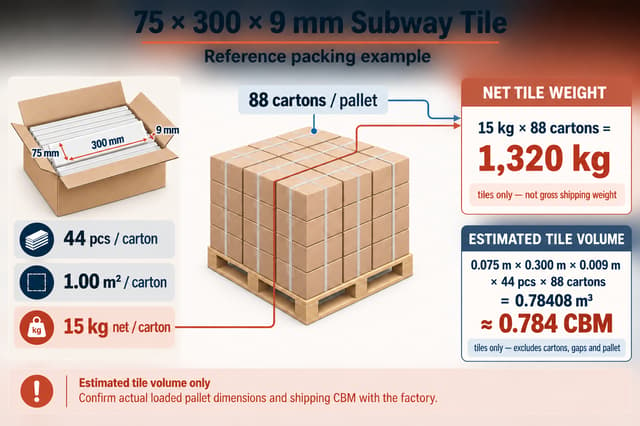
For a 75×300×9 mm textured subway tile packed 44 pieces and 1 m² per carton, with 88 cartons per pallet, the pallet contains 3,872 pieces, covers 88 m² and has a calculated tile net weight of 1,320 kg.
Thickness and surface matter. A 75×300×8 mm configuration in the same reference weighs 13 kg per carton, while the 9 mm textured version weighs 15 kg. Across 88 cartons, that creates a 176 kg difference before packaging materials are added.
For the same tile, the estimated solid tile volume is 0.075 × 0.300 × 0.009 × 44 × 88 = 0.78408 m³, or approximately 0.784 CBM. This excludes cartons, spaces between tiles and the pallet. Actual shipping CBM must use the factory-confirmed external dimensions of the loaded pallet.
4. Confirm the packing version before ordering
Some subway tile sizes have both new and old configurations. A 100×300×8 mm tile, for example, is listed as 50 pieces, 1.5 m² and 20 kg net per carton in the new packing. The old packing uses 40 pieces, 1.2 m² and 16 kg per carton. The resulting pallet areas are 96 m² and 86.4 m² respectively.
A purchase order that states only the tile size leaves room for errors. Record the approved pieces, area and weight per carton, cartons per pallet and packing version on the quotation, proforma invoice, artwork approval and final packing list.
Private-label buyers should also confirm the brand, product code, colour, finish, barcode, batch or shade fields, handling marks, country-of-origin information and destination language. The importer remains responsible for checking current local marking, customs and compliance requirements.
5. Export and pre-shipment checklist
Before requesting a quotation, send the destination, application, model, dimensions, thickness, surface, colour and required quantity. State whether mixed models are acceptable and provide any carton, pallet, barcode or warehouse-handling limits.
Before shipment, verify:
- model, colour, finish, shade and batch identification;
- pieces, area and sampled weight per carton;
- carton condition and print accuracy;
- cartons per pallet, pallet dimensions and gross weight;
- pallet stability, protection and traceability;
- total cartons, square metres and pallets against the packing list.
Do not calculate a fixed container quantity from square metres alone. Payload limits, pallet dimensions, weight distribution, road restrictions and handling equipment affect the final load. Ask the freight forwarder to approve the plan for the actual route. Use the Tile Pre-Shipment Inspection Checklist to connect packaging checks with product and shipment records.
6. Common buyer questions
What are common subway tile sizes? Ceraglow examples include 50×200, 75×150, 75×300 and 100×300 mm. Confirm whether dimensions are nominal or actual and check the thickness, edge and surface.
How many tiles are packed in a carton? There is no universal quantity. The examples include 44 pieces for 75×300 mm, 100 pieces for 50×200 mm and 50 pieces for one 100×300×8 mm configuration.
Is pallet net weight enough to book freight? No. Freight planning requires confirmed gross weight, pallet dimensions and route-specific limits.
Subway tile packaging should be approved as part of the product specification. Review the Ceraglow subway tile range and the guide to building a market-ready tile assortment. For an order-specific review, send the destination market, selected models, quantities, label requirements and preferred shipment timing.
Join the discussion
Your email address will not be published. Required fields are marked.