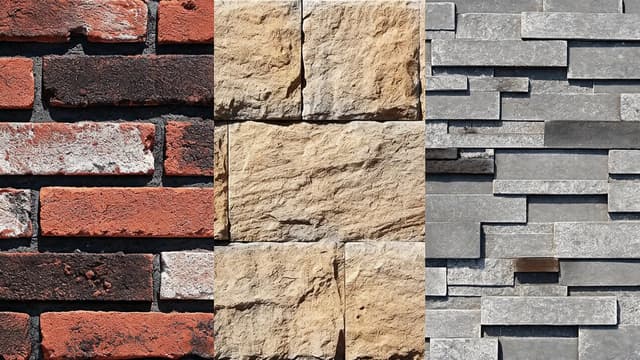
Review compressive strength, freeze-thaw, shrinkage, unit weight and shear bond results before specifying manufactured stone veneer for an exterior project.
Manufactured stone veneer for an exterior project should be evaluated with more than colour, texture and price. Importers, distributors, architects and contractors also need product-specific evidence for strength, freeze-thaw behaviour, dimensional stability, unit weight and bond performance.
This guide translates one third-party CMHA laboratory report into practical questions for project buyers. The report covers a manufactured stone veneer mix and a Mountain Stone profile tested with methods referenced by ASTM C1670/C1670M-23a. It does not represent every colour, profile, production batch or completed wall assembly.
Manufactured stone veneer ASTM test results at a glance
| Property | Test method | Reported result | Reference stated in the report |
|---|---|---|---|
| 28-day net compressive strength | ASTM C39/C39M-23 | 2,590 psi average | 2,100 psi minimum |
| Rapid freezing and thawing | ASTM C666/C666M-15, Procedure A | -0.8%, -0.8% and -0.2% reported mass loss; no through-fracture | No specimen above 1.5% mass loss or with a complete through-fracture |
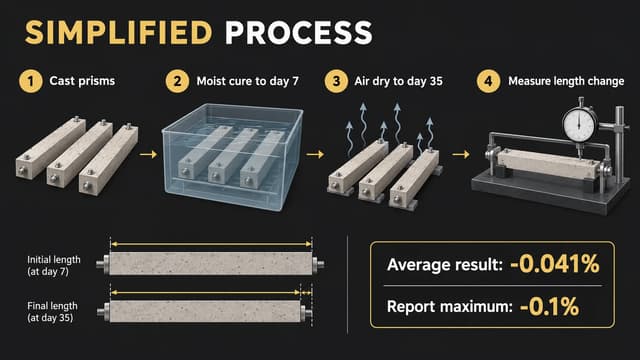
| Linear drying shrinkage | ASTM C157/C157M-17 | -0.041% average | -0.1% maximum |
| Saturated unit weight | ASTM C140/C140M-23a | 8.0 lb/ft² average | 15 lb/ft² maximum |
| Shear bond strength | ASTM C482-20, as modified | 148 psi average | No pass/fail threshold shown on the test page |
The table is a purchasing summary, not a substitute for the complete signed report or the project specification. Buyers should match every document to the exact product being quoted.
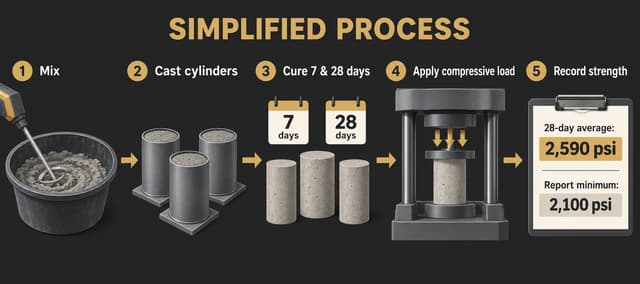
Compressive strength: 2,590 psi at 28 days
The manufactured stone veneer mix recorded an average seven-day net compressive strength of 2,220 psi. At 28 days, the average increased to 2,590 psi.
The report lists a minimum 28-day value of 2,100 psi under ASTM C1670/C1670M-23a. The tested average was 490 psi, or about 23%, above that stated minimum. This result describes the tested mix. Project teams should still consider the veneer profile, substrate, mortar and installation system.
Freeze-thaw results: no through-fracture reported
Freeze-thaw evidence is relevant when exterior stone veneer may be exposed to cold or changeable climates. Three specimens were tested in water using ASTM C666/C666M Procedure A as modified by the referenced product specification.
The report records cumulative mass-loss values of -0.8%, -0.8% and -0.2%. None of the specimens showed a fracture through the cross-section. The stated requirement is that no individual specimen show mass loss greater than 1.5% or a complete through-fracture.
These laboratory results do not approve the complete facade. Drainage, flashing, movement accommodation, compatible fixing materials and installation workmanship remain part of exterior performance.
Drying shrinkage and dimensional stability
The average linear drying shrinkage result was -0.041%, compared with the report's stated maximum of -0.1%. This gives specifiers a measured reference for the tested mix, but it does not replace movement-joint design or installation guidance for the whole wall.
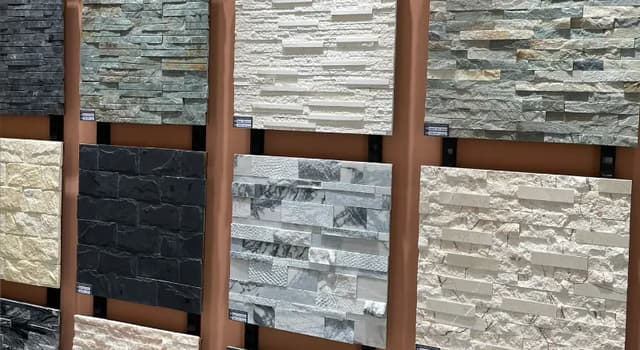
Unit weight, thickness and face dimensions
The tested Mountain Stone units had an average saturated unit weight of 8.0 lb/ft² and an average thickness of 0.87 inches. The maximum recorded face dimension was 20.07 inches, and the maximum face area was 0.67 ft².
The report lists maximum values of 15 lb/ft² for saturated unit weight, 2.625 inches for average thickness, 36 inches for face dimension and 5 ft² for face area. It also reports an average saturated density of 110.9 lb/ft³ and absorption of 13.4 lb/ft³ without acceptance limits on that page.
Weight and dimensions affect packaging, freight planning, site handling and installation detailing. Buyers can compare current profiles on the manufactured stone veneer collection, then request the specification for the selected series.
Shear bond strength: interpret the result carefully
Five specimens were tested using ASTM C482-20 with modifications referenced by ASTM C1670/C1670M-23a. Individual shear bond results ranged from 94 to 191 psi, with an average of 148 psi.
The test page reports measured values but does not show a pass/fail threshold. The number should therefore be presented as test data, not as a standalone claim that every product or installation is “ASTM approved.” Actual bond performance can also depend on the substrate, mortar, surface preparation, weather and installer practices.
What buyers should verify before ordering
- Confirm that the report identifies the product, mix or profile being quoted.
- Check the test method, edition, result and any stated acceptance limit.
- Ask which colours, profiles and production batches the document covers.
- Review installation instructions and compatible substrate and mortar requirements.
- Confirm the documentation required by the project and destination market.
- Connect the approved sample and specification to the shipment inspection record.
Use the pre-shipment inspection checklist to connect approved samples with shipment records. Ceraglow's quality-control process explains how product specifications, inspection records and shipment checks can be reviewed before delivery.
Common questions about manufactured stone veneer testing
Does this report certify every manufactured stone veneer product?
No. It records results for the samples and descriptions identified in the report. Buyers should request documentation linked to the exact product being considered.
Is the tested stone veneer suitable for every exterior climate?
The results provide evidence for the tested specimens, including the reported freeze-thaw outcome. Suitability still depends on project requirements, exposure, wall design, fixing materials and local rules.
Which result should a buyer review first?
There is no single universal number. Start with the intended application and project specification, then review strength, freeze-thaw behaviour, dimensions, weight, bond information and installation requirements together.
Join the discussion
Your email address will not be published. Required fields are marked.