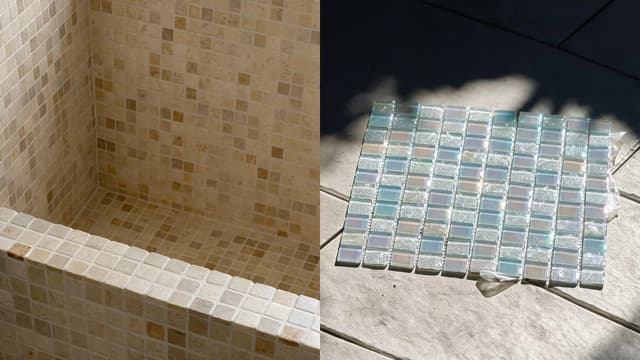
Specify mosaic floor tile by application, material, surface data, mounting method and installation system—not by appearance or chip size alone.
Mosaic floor tile can follow curves, divide layouts into zones and create frequent joints across a floor. Those qualities make it useful for showers, pool surrounds, spas, changing rooms and selected commercial interiors. They do not, however, make every mosaic suitable for every wet or high-traffic area.
A dependable specification connects the exact product to the application, test evidence, mounting method and complete installation system. Use the following process when comparing samples or preparing a supplier enquiry.
1. Define the application before choosing the mosaic
State whether the tile is for a shower floor, pool interior, pool surround, spa, hospitality washroom, commercial entrance or another location. Record whether it will be barefoot or footwear traffic, continuously submerged or intermittently wet, exposed to cleaning chemicals, or subject to trolleys and concentrated loads.
“Wet area” and “commercial grade” are not complete specifications. The supplier needs the destination market and operating conditions to identify the relevant product data and installation requirements.
2. Confirm the material and water absorption
Identify whether the product is porcelain, other ceramic tile, glass or another material. For ceramic tile, request the water-absorption classification and test method for the proposed model. The Tile Council of North America explains that porcelain tile has water absorption of 0.5% or less under the applicable definition.
Low absorption can be relevant to wet exposure, but it does not prove floor suitability, slip performance, strength or suitability for submerged use. Review those requirements separately.
3. Record chip size, sheet size and thickness
Do not confuse the individual mosaic chip with the mounted sheet. A useful submittal states the nominal chip dimensions, sheet dimensions, thickness, joint width, pieces per sheet and coverage per carton. Confirm whether the dimensions include the joint.
Smaller chips can make curved surfaces and falls easier to form, but the final layout still depends on the substrate, drain position and installer. Check transitions, corners, steps, edges and adjacent finishes before approving the format.
For format examples, compare model 98A015 with 98 x 98 mm chips, 48030 with 48 x 48 mm chips and 25039 with 25 x 25 mm chips. These products illustrate different format options; final approval still requires evidence for the intended application.
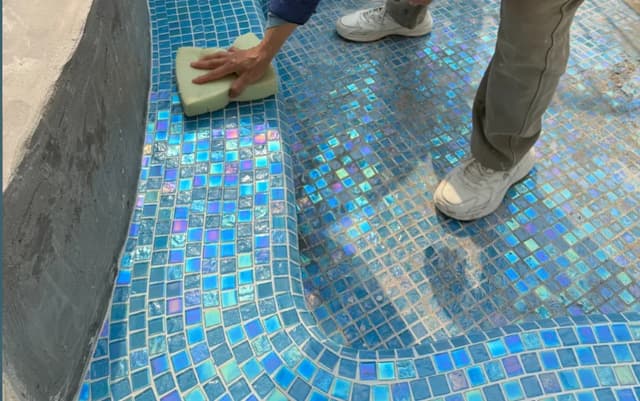
4. Review the exact surface and wet-use evidence
Do not assume that more grout joints automatically make a floor safe. Slip risk also changes with surface texture, contaminants, slope, drainage, footwear, cleaning and user behaviour. Request the declared area of use and any test report required by the project or destination market, then verify that the report identifies the same product and finish.
For commercial areas, also review the evidence relevant to traffic and service conditions, such as breaking strength and surface wear. A decorative wall mosaic should not be moved to a floor because the colour is suitable.
5. Check how the mosaic is mounted
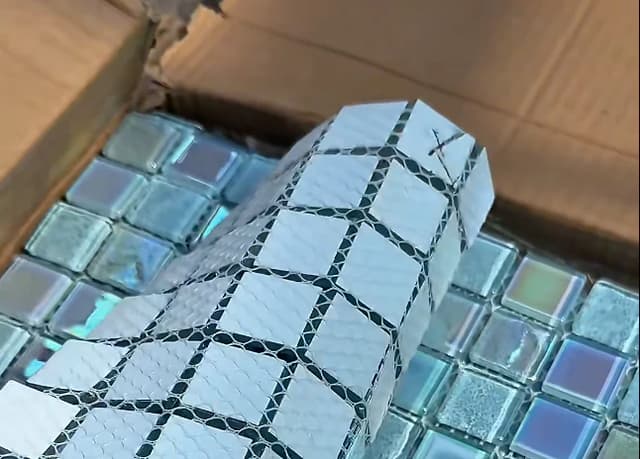
Ask whether the product is mesh-backed, dot-mounted, paper-faced, film-faced or supplied loose. The mounting material must be compatible with the adhesive, environment and installation method. For pools and other submerged installations, request written confirmation for the proposed mounting system rather than assuming that any mesh or glue is acceptable.
Dry-lay several sheets together. Compare joints within each sheet with joints between sheets, inspect alignment and check whether backing material interferes with adhesive contact. The finished surface should not reveal the sheet pattern.
6. Specify the complete installation system
The tile is only one part of the assembly. Coordinate substrate preparation, falls, drains, waterproofing, adhesive, grout, movement joints, perimeter details and curing with the project designer and installation-material manufacturer. Pools also require procedures for filling, water treatment and maintenance.
Choose grout colour with an installed sample. Grout can change the appearance of a small-chip mosaic, while joint width and depth affect workmanship and cleaning. Confirm chemical exposure and maintenance routines before selecting grout or sealers.
7. Approve a traceable sample and submittal
Before ordering, approve a labelled sample or mock-up and keep it as the control reference. The final submittal should include:
- manufacturer, series, product code, colour and finish;
- material, chip size, sheet size, thickness and mounting method;
- declared applications and product-specific test reports;
- shade or batch information, quantity, packing and spare allowance;
- installation-system references and maintenance requirements.
For imported projects, connect every carton and later production batch to the approved item. If a test document or claim cannot be matched to the exact model, treat it as pending verification.
Quick specification checklist
| Item | What to record |
|---|---|
| Application | Floor zone, wet or submerged exposure, traffic and cleaning |
| Product | Material, code, colour, finish, chip, sheet and thickness |
| Evidence | Declared use, relevant test method, report and tested model |
| Mounting | Mesh, dots, face mounting or loose pieces; adhesive compatibility |
| System | Substrate, waterproofing, falls, adhesive, grout and movement joints |
| Approval | Labelled sample, multi-sheet layout, mock-up and batch controls |
Send a complete project brief
When requesting pool or wet-area mosaic tiles, share the application, destination market, preferred material, chip and sheet size, colour, quantity, traffic, cleaning conditions and required standards. Ceraglow can then review relevant product options and identify which information still needs confirmation.
Written by Ceraglow Product R&D Department. Reviewed by Ceraglow Content Review Department.
Join the discussion
Your email address will not be published. Required fields are marked.