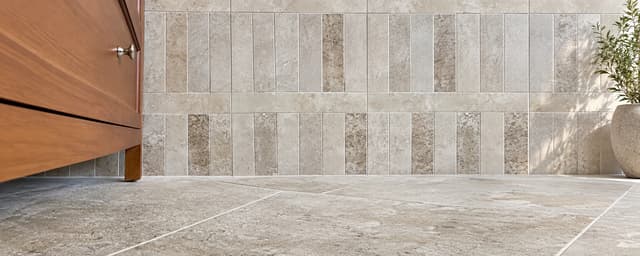
Learn the real differences between wall and floor tiles, which specifications matter, and when a floor tile can be installed on a wall.
TILE BUYER GUIDE
Learn the real differences between wall and floor tiles, which specifications matter, and when a floor tile can be installed on a wall.
Wall tile and floor tile can look similar in a showroom. That does not make them interchangeable.
A floor must handle foot traffic, point loads, wear, cleaning, and—depending on the location—water or other contaminants. A wall does not receive the same traffic, but it introduces different questions about weight, substrate, fixing, format, layout, and working overhead.
The safest buying rule is simple: choose the tile from its declared area of use and supporting technical data, not from its appearance or product name.
Wall Tile vs Floor Tile at a Glance
What Is Wall Tile?
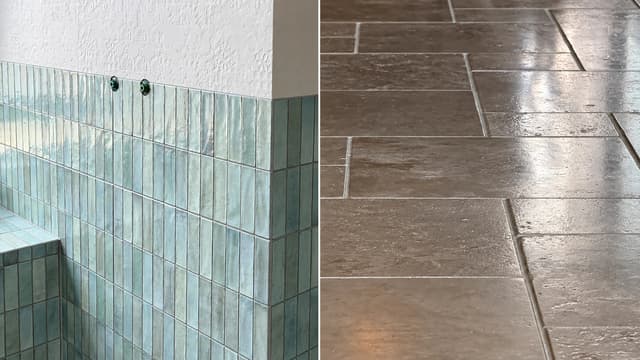
“Wall tile” can mean a product specifically classified for wall use or simply a tile selected for a vertical installation. Glazed ceramic wall tile is often used for bathrooms, kitchens, retail interiors, and decorative features because it can provide colour, pattern, and an easy-to-clean surface.
However, the term does not tell you the exact water absorption, thickness, size tolerance, chemical resistance, or fixing requirement. Those details belong in the technical specification.
ANSI A137.1 defines ceramic-tile categories and provides specifications used by buyers, specifiers, installers, and manufacturers. Internationally, ISO 13006 establishes ceramic-tile classifications, characteristics, and marking requirements.
What Is Floor Tile?
Floor tile is a product declared suitable for a walking surface under defined conditions. The required performance changes with the project:
- A bedroom floor and an airport concourse do not have the same traffic.
- A dry living room and a commercial kitchen do not have the same contaminants.
- A level lobby and a sloped pool surround do not have the same slip-related risks.
- An interior slab and an exterior freeze-thaw installation do not have the same environmental exposure.
This is why “floor tile” should begin a specification conversation rather than end it.
Can Wall Tile Be Used on a Floor?
Do not install a wall-only tile on a floor unless the manufacturer also declares that exact product suitable for the intended floor application.
Wall products may not have the required breaking strength, wear performance, surface-use classification, or thickness for foot traffic and service loads. A visually convincing mock-up cannot replace test information.
For floor products, relevant methods can include:
- ISO 10545-4 for modulus of rupture and breaking strength
- ISO 10545-7 for surface abrasion of glazed floor tiles
- ISO 10545-6 for deep abrasion of unglazed floor tiles
- ANSI A326.3 guidance for hard-surface flooring use classifications and DCOF testing
The required documents depend on the market, standard, tile type, and project.
Can Floor Tile Be Used on a Wall?
Sometimes—but only after the vertical assembly has been evaluated.
A floor-rated tile may be denser, thicker, larger, or heavier than a typical wall tile. The designer and installer must confirm:
- The substrate can support the system
- The adhesive or mechanical fixing method suits the tile and substrate
- The tile format and weight fall within system limits
- Required coverage can be achieved
- Movement joints and changes of plane are detailed correctly
- The layout is practical for handling, cutting, and alignment
- Local codes and project specifications are satisfied
The fact that a tile performs on a floor does not automatically validate every wall installation.
Seven Differences Buyers Should Check
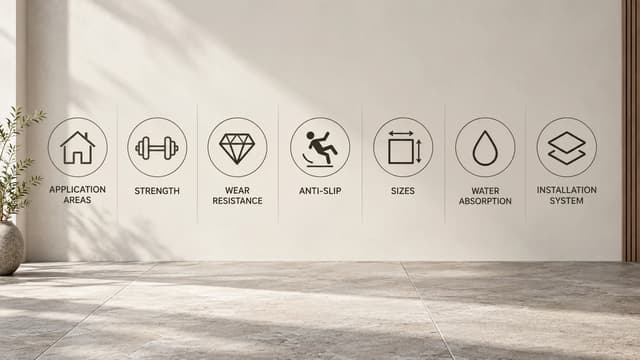
1. Declared Area of Use
The most important question is whether the manufacturer declares the product suitable for the exact application. Avoid vague labels such as “multi-purpose” without supporting conditions.
2. Breaking Strength
Floor tiles experience service loads that wall tiles do not. ASTM C648 provides a method for determining the breaking strength of ceramic tiles and assessing whether a lot meets specified strength requirements.
Do not compare a breaking load without also checking product size, thickness, test method, and acceptance requirement.
3. Wear Resistance
The exposed surface must match traffic and maintenance. Glazed and unglazed products use different abrasion approaches, so a buyer should ask which method applies rather than request a generic “wear grade.”
4. Surface Use and Slip Risk
Colour and finish names do not establish safe use. TCNA notes that contaminants, footwear, slope, drainage, wear, maintenance, and surface structure can all affect slip risk. A DCOF result is one input, not a promise that no one will slip.
5. Dimensions and Surface Quality
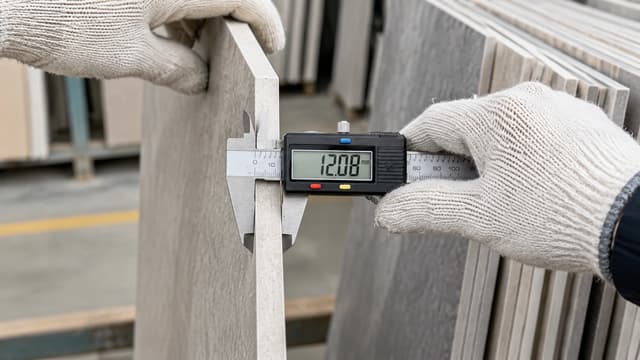
Size consistency affects grout-joint planning, alignment, lippage management, packing, and installation speed. ISO 10545-2 covers dimensions including length, width, thickness, straightness, rectangularity, surface flatness, and surface quality.
6. Water Absorption
Water absorption helps classify the tile body. It can influence selection, but it does not determine wall or floor suitability by itself. A porcelain classification does not replace wear, strength, surface, and installation checks.
7. Installation System
Tile, mortar, grout, membrane, substrate, movement joints, drainage, and workmanship operate as one assembly. TCNA's ceramic-tile installation guidance recommends matching the adhesive to the tile, substrate, and location and following manufacturer instructions.
How to Choose Wall Tile
For Dry Interior Walls
Prioritise declared wall suitability, format, weight, cleanability, design, dimensional consistency, and a fixing system matched to the substrate.
For Kitchen Backsplashes
Consider stain and chemical exposure, grout maintenance, edges, penetrations, heat sources, and cleaning products. Confirm local installation requirements around cooking equipment.
For Shower Walls
Choose a suitable tile and design the complete wet-area assembly. Tile and grout are not substitutes for the specified waterproofing, substrate, joints, penetrations, and drainage details.
For Exterior Walls
Confirm exterior suitability, climatic exposure, freeze-thaw requirements where applicable, fixing design, wind and structural conditions, movement, drainage, and local code obligations.
How to Choose Floor Tile
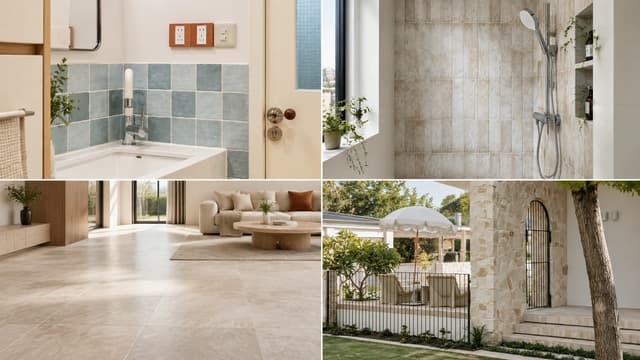
For Residential Dry Floors
Match strength and wear to household use. Consider cleaning, pets, tracked dirt, furniture movement, tile format, grout joints, and replacement availability.
For Bathrooms and Wet Interiors
Evaluate the declared wet-use category, surface structure, drainage, slope, contaminants such as soap, and maintenance. Do not select from finish name alone.
For Commercial Floors
Define traffic, rolling loads, expected contaminants, cleaning chemicals, operational downtime, replacement strategy, and surface-use classification before selecting a product.
For Exterior Floors
Confirm exterior and climatic suitability, drainage, freeze-thaw conditions, thermal movement, substrate, setting materials, joints, and applicable codes.
Compare Products Only After Defining the Application
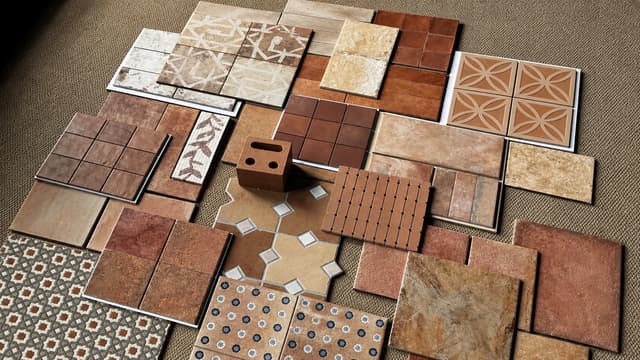
Use product pages to compare design after establishing technical requirements. For example, buyers can review Dace Grey and Gragon and Phoenix as design options, then request the current specification for the selected item.
Do not infer floor, wet-area, or exterior suitability from an image. Confirm the body, size, thickness, finish, declared use, and relevant test reports for the exact product.
A Practical Selection Checklist
Before approving a wall or floor tile, record:
- Intended location and whether it is interior or exterior
- Wall or floor application
- Dry, wet, immersed, freeze-thaw, chemical, or high-traffic exposure
- Applicable standard and destination-market requirements
- Tile body and water-absorption classification
- Size, thickness, surface, edge, shade, and calibre
- Required strength and wear evidence
- Slip-related product-use information for floors
- Substrate and installation system
- Cleaning and maintenance conditions
- Approved sample and batch-identification process
- Packaging, labelling, spare quantity, and replacement plan
Common Selection Mistakes
Choosing by Thickness Alone
A thicker tile is not automatically floor-rated. Use the complete product specification.
Assuming Porcelain Can Go Anywhere
Porcelain identifies very low water absorption. It does not independently certify every wall, floor, wet, exterior, or commercial application.
Treating Matt as a Safety Rating
Matt describes appearance, not the complete slip-related performance of a walking surface.
Ignoring the Installation Assembly
Even a correctly classified tile needs the right substrate, fixing materials, coverage, joints, and workmanship.
Mixing Uncontrolled Batches
Confirm shade and calibre identifiers. Review multiple pieces from the shipment before installation, not only a single approval sample.
Frequently Asked Questions
What is the main difference between wall tile and floor tile?
Floor tile must be declared and specified for walking surfaces, including relevant strength, wear, and surface-use requirements. Wall selection focuses more on vertical fixing, weight, substrate, format, and environmental exposure.
Can porcelain floor tile go on a wall?
It may be possible if the substrate and fixing system support the exact product and the design meets applicable requirements. Confirm format, weight, mortar or fixing method, coverage, and movement details.
Can ceramic wall tile go on a bathroom floor?
Not unless that exact product is also declared suitable for the bathroom floor conditions. A wall-only classification is insufficient.
Should bathroom wall and floor tiles match?
They may coordinate visually without being the same technical product. Select each surface by its performance and installation needs, then coordinate colour, pattern, and format.
Is floor tile more durable than wall tile?
Floor products are designed for different service demands, but durability cannot be judged from the label alone. Verify the properties relevant to the intended floor.
Specify the Surface Before You Select the Style
First define where the tile goes and what it must withstand. Then shortlist designs that meet those requirements.
Ceraglow Building Material Co., Ltd. supports international distributors and project buyers with ceramic and porcelain tile manufacturing, OEM/ODM options, and product-document review. Send us the wall or floor application, destination market, size, finish, quantity, and required standards for a more relevant recommendation.
CTA: Request Wall and Floor Tile Options
Join the discussion
Your email address will not be published. Required fields are marked.